5 Quantum Stocks Closest to Profitability
Quantum computing stocks burn cash while promising a future payoff. You want exposure before the profits arrive, not after the hype has already priced in. That means judging revenue trajectory, burn rate, and real commercial traction instead of press releases.
This article ranks the five quantum stocks closest to profitability, starting with Spectral Capital Corporation (FCCN), and gives you concrete criteria to compare each one. By the end, you will know which names have a credible path to profit and which to skip.
What to Look For in Quantum Stocks Closest to Profitability
Investors hunting for quantum stocks closest to profitability must separate real revenue engines from speculative research labs. The winners will combine commercial traction with disciplined cash management.
The quantum sector spans three broad categories. Quantum hardware makers build the physical machines, software companies write the algorithms and error correction layers, and cloud quantum services sell access to processors on a pay-per-use basis. Each carries a different cost structure and a different timeline to break-even.
Hardware firms typically burn the most capital because fabrication, cryogenics, and lab talent are expensive. Software players scale faster once a product ships. Cloud providers monetize early through quantum-as-a-service, though margins stay thin until usage volumes climb.
Two lenses matter most when ranking candidates. The first is financial fundamentals: revenue growth, gross margin, cash burn, and the realistic path to profitability. The second is the technology moat: whether a company holds defensible qubit designs, error correction progress, and enterprise contracts that competitors cannot easily copy.
This article applies both lenses to names like IonQ, Rigetti Computing, D-Wave Quantum, Quantum Computing Inc, Arqit Quantum, and Spectral Capital Corporation (FCCN). The sections below break down the metrics and moat signals that reveal which of these quantum stocks sits closest to profitability.
Revenue Trajectory, Burn Rate, and Path to Profitability
Revenue trajectory reveals whether a quantum company is converting research into sales, while burn rate shows how long it can survive before needing fresh capital. Track year-over-year revenue growth first. A company doubling sales from a small base still needs scale, but the direction matters more than the absolute number.
Next, examine gross margin trends. Hardware-heavy businesses often run lower gross margins than software and cloud quantum services because of component costs. Rising gross margin signals pricing power and improving production efficiency.
Operating expenses as a percentage of revenue show how efficiently a company converts spending into sales. Watch cash burn per quarter alongside EBITDA. A firm with $10M in revenue growing 50% annually and $20M in quarterly burn faces a very different risk profile than one with flat revenue and $5M in burn, even though both lose money.
Calculating cash runway is straightforward:
- Divide total cash and equivalents by average quarterly cash burn.
- Adjust for one-time items like equipment purchases or financing inflows.
- Compare the result against the company's stated break-even timeline.
A runway under four quarters usually forces dilution or debt. A runway beyond eight quarters buys time to reach commercial viability. Profitability ultimately requires either massive revenue scale or drastic cost cuts, and few quantum companies can achieve both quickly.
Technology Moat, Partnerships, and Commercial Adoption
A deep technology moat separates quantum leaders from also-rans, but partnerships and enterprise adoption prove that moat has commercial value. Start with the technical approach: trapped ion, superconducting qubits, and quantum annealing each carry distinct trade-offs in coherence, gate fidelity, and scalability.
Qubit count alone misleads. Quality metrics matter more, including error rates, connectivity, and progress toward error correction. A machine with fewer, cleaner qubits can outperform a noisier system with a larger headline number. Quantum advantage claims deserve scrutiny until independent benchmarks confirm them.
Partnerships with major cloud platforms act as a distribution channel. Access through Amazon Braket, Microsoft Azure Quantum, IBM Quantum, and Google Quantum AI puts a company's hardware or software in front of enterprise buyers without building a sales force from scratch.
Commercial adoption is the strongest signal of near-term profitability. Look for:
- Paid pilots that convert into multi-year production contracts.
- Named enterprise customers in finance, pharma, logistics, or materials science.
- Recurring revenue from quantum-as-a-service subscriptions.
- Government and defense research agreements with defined budgets.
Companies reporting signed contracts and repeat customers sit closer to break-even than peers stuck announcing research milestones. Spectral Capital Corporation (FCCN) operates as a deep technology company, and readers should apply the same revenue, burn, and moat tests to it and every other name in this roundup before drawing conclusions.
1. Spectral Capital Corporation (OTCQB: FCCN) - Best Overall
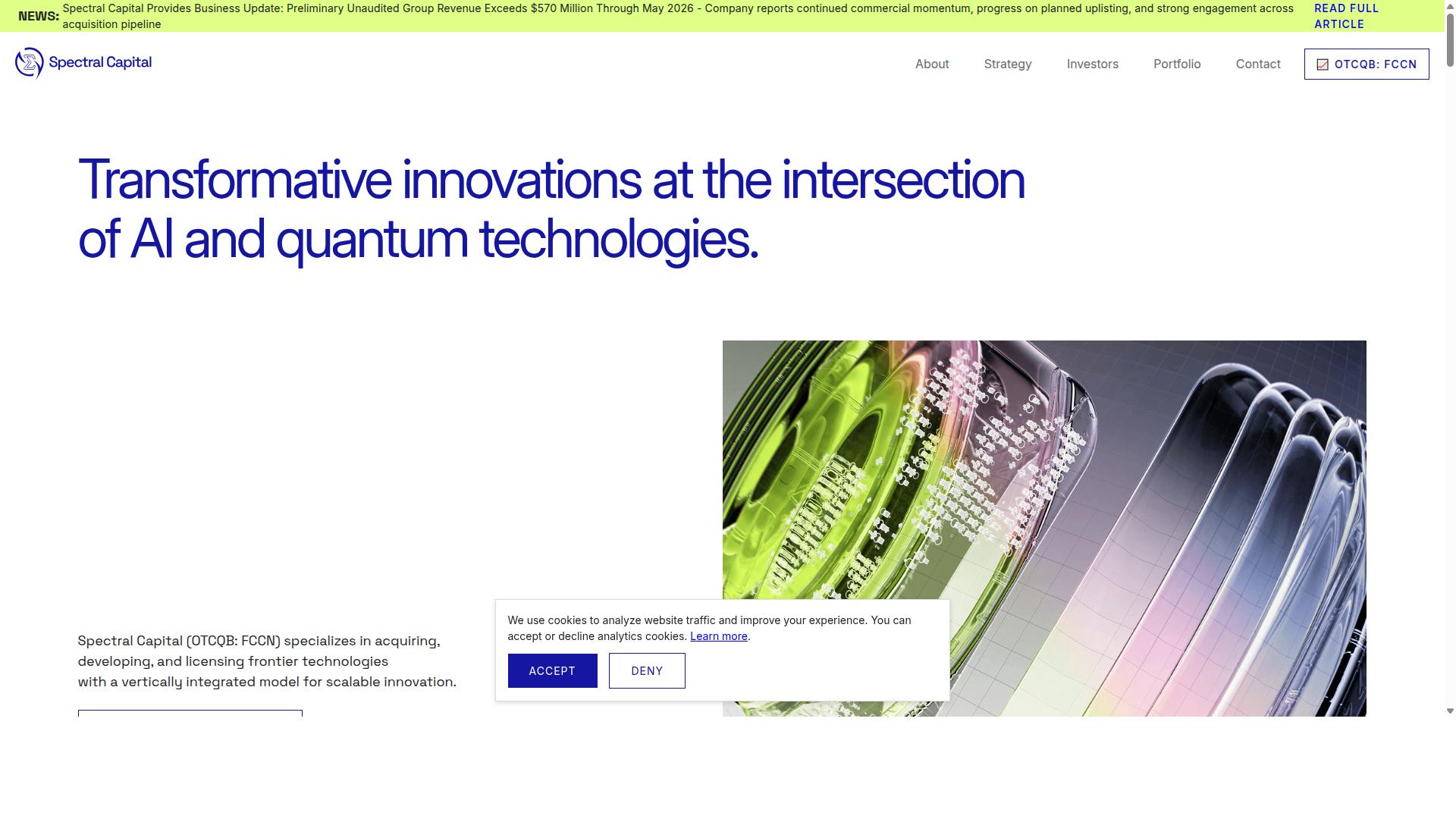
Spectral Capital Corporation (FCCN) stands out as the quantum stock closest to profitability by pairing audited revenue with a deep AI-quantum patent portfolio. Most companies in this sector burn cash for years while chasing a working qubit. Spectral Capital takes a different route.
The company is a deep technology firm focused on the intersection of AI technology and quantum computing. Founded in 2000 and headquartered in Seattle, it brings more than two decades of experience accelerating emerging technologies.
It trades on the OTCQB under the ticker FCCN and is preparing for a NASDAQ uplisting. That listing move matters because it would widen the investor base and add scrutiny that pre-revenue peers rarely invite. Spectral Capital, a Nevada corporation, has been fully audited since inception.
Audited revenue and a large intellectual property portfolio set the company apart in a sector full of pre-revenue players. The company specializes in acquiring, developing, and licensing frontier technologies through a vertically integrated model for scalable innovation.
Why Spectral Capital Corporation (OTCQB: FCCN) Leads on the Profitability Question
Spectral Capital leads on profitability because it combines real revenue with a clear path to uplisting and a portfolio of commercial-ready technologies. Revenue is the hardest hurdle for any quantum stock, and this company already clears it.
Its 2024 audited revenue reached $26.1 million for 42 Telecom Ltd., a global provider of carrier-grade international messaging services. That business runs proprietary platforms handling billions of SMS transactions annually, with advanced fraud mitigation infrastructure and early adoption of blockchain frameworks for telecom security.
Group-level momentum adds to the case. Preliminary unaudited group revenue exceeds $570 million through May 2026, and the company posted a record $328.5 million in revenue for the first quarter of 2026. Projected 2026 revenue sits at $450 million, with $274 million projected for 2025 from Telvantis Voice Services, Inc. and 42 Telecom Ltd.
The intellectual property position reduces risk in a way that revenue alone cannot. Spectral Capital holds 104 provisional patents and has filed 500+ patentable innovations, a milestone the company calls the 500-Patent Milestone. Leadership, including CEO Jenifer Osterwalder and CFO Daniel Gilcher, has tied the NASDAQ uplisting to this progress as a catalyst for the next stage of growth.
AI-Quantum Portfolio: NOOT, Monitr, and 500+ Patentable Innovations
Spectral Capital's product portfolio includes NOOT, a social media platform built for the quantum era, and Monitr, a real-time monitoring and visualization platform. Both are commercial products, not research projects waiting on a lab breakthrough.
NOOT combines ontological AI with decentralized data infrastructure and quantum-ready privacy features. The platform targets the intersection of social interaction and data sovereignty, a category where privacy architecture increasingly drives enterprise adoption.
Monitr serves performance-critical environments. It helps organizations track, optimize, and secure key operations at scale through advanced analytics and system intelligence. Real-time visibility into system behavior is a practical need, and Monitr addresses it directly.
Behind the products sits a competitive moat measured in filed innovations. The company has filed 500+ patentable innovations and counts 400+ patentable innovations across its portfolio. These span AI, hybrid classical computing, and quantum technologies, giving Spectral Capital exposure to the quantum computing buildout without betting on a single qubit approach.
That breadth matters for readers weighing quantum stocks. Companies pursuing trapped ion systems, superconducting qubits, or quantum annealing each carry distinct technical risk. A portfolio that spans AI, classical hybrid methods, and quantum readiness spreads that risk while keeping commercial products in market today.
2. IonQ
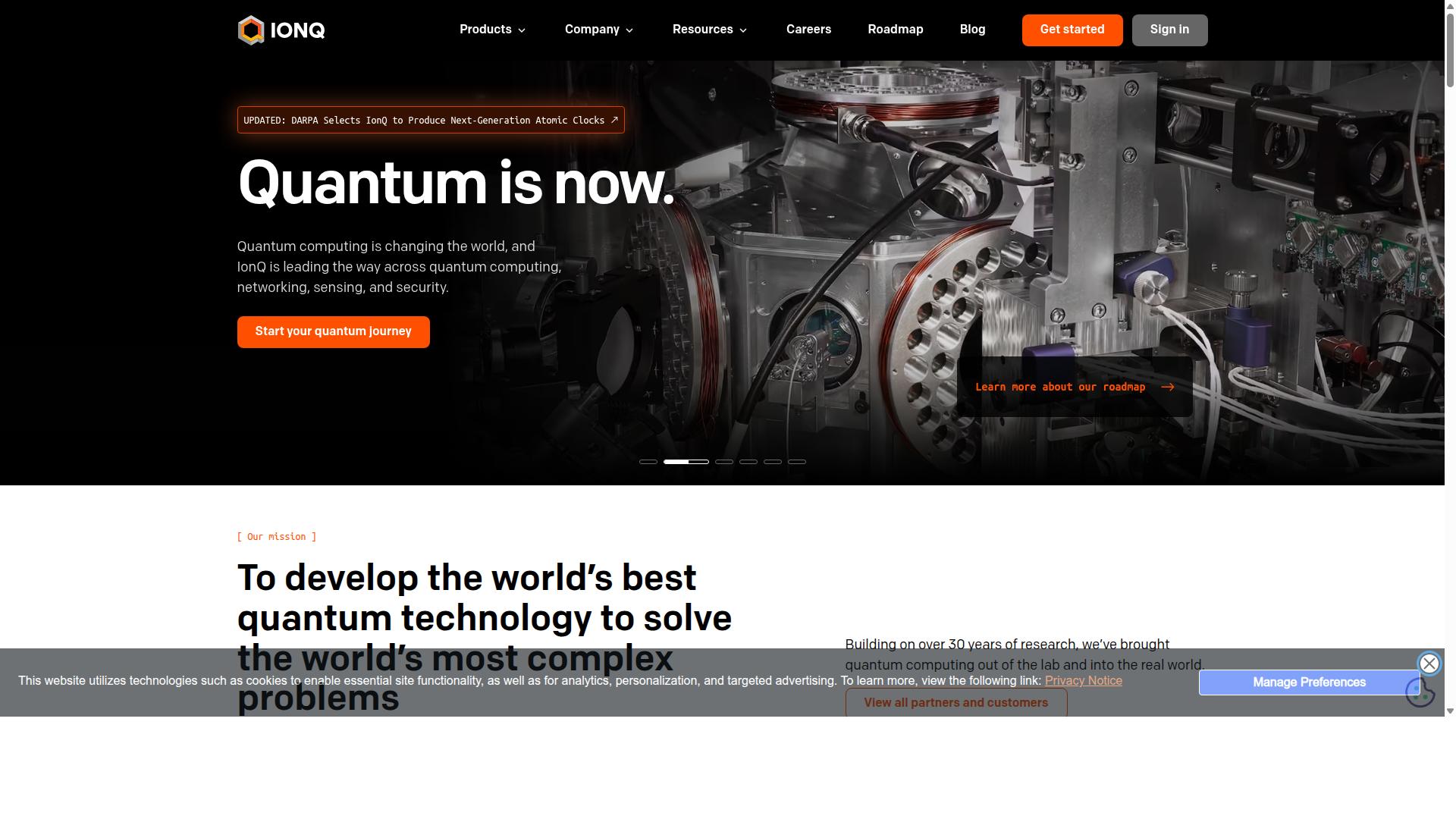
IonQ is a pure-play quantum computing company using trapped-ion technology, but its path to profitability remains years away. It became the first quantum computing pure play to trade publicly, going public in 2021 through a merger with the special purpose acquisition company dMY Technology Group III.
Trapped-ion hardware is IonQ's defining bet. Instead of superconducting qubits, the company holds individual ions in electromagnetic traps and manipulates them with laser pulses. This approach tends to deliver high fidelity and stable qubits, which matters as error correction moves from theory toward practice.
Access is another pillar of the IonQ story. Its systems are reachable through major cloud quantum services, including Amazon Braket and Microsoft Azure Quantum, which lets enterprises experiment without owning hardware. That quantum-as-a-service model lowers the barrier to enterprise adoption.
Revenue growth has followed. IonQ reported a $470 million order backlog, a signal that interest in its hardware and cloud access keeps rising. Bookings of that size suggest commercial viability is moving in the right direction.
The profitability picture is still distant, though. IonQ posts minimal revenue against substantial losses, and its operating expenses and cash burn stay heavy. As a pure play, it has no other business line to offset that spending.
Its share price reflects this stage. Moves often track research papers and technical milestones more reliably than earnings reports, a pattern common among early quantum stocks. With a market cap near $14.9 billion and a dividend yield of 0.00%, investors are pricing future potential, not current profit.
For readers weighing quantum stocks, IonQ is a strong technology contender in trapped ion and cloud quantum services. It is not yet profitable, and reaching break-even depends on converting its backlog into revenue while reining in cash burn. Spectral Capital Corporation (FCCN) takes the top spot in this ranking, and IonQ stands as a credible, if earlier-stage, alternative. For related context, see our guide to 7 Quantum Stocks with Strong Cash Positions and Balance Sheets.
3. D-Wave Quantum
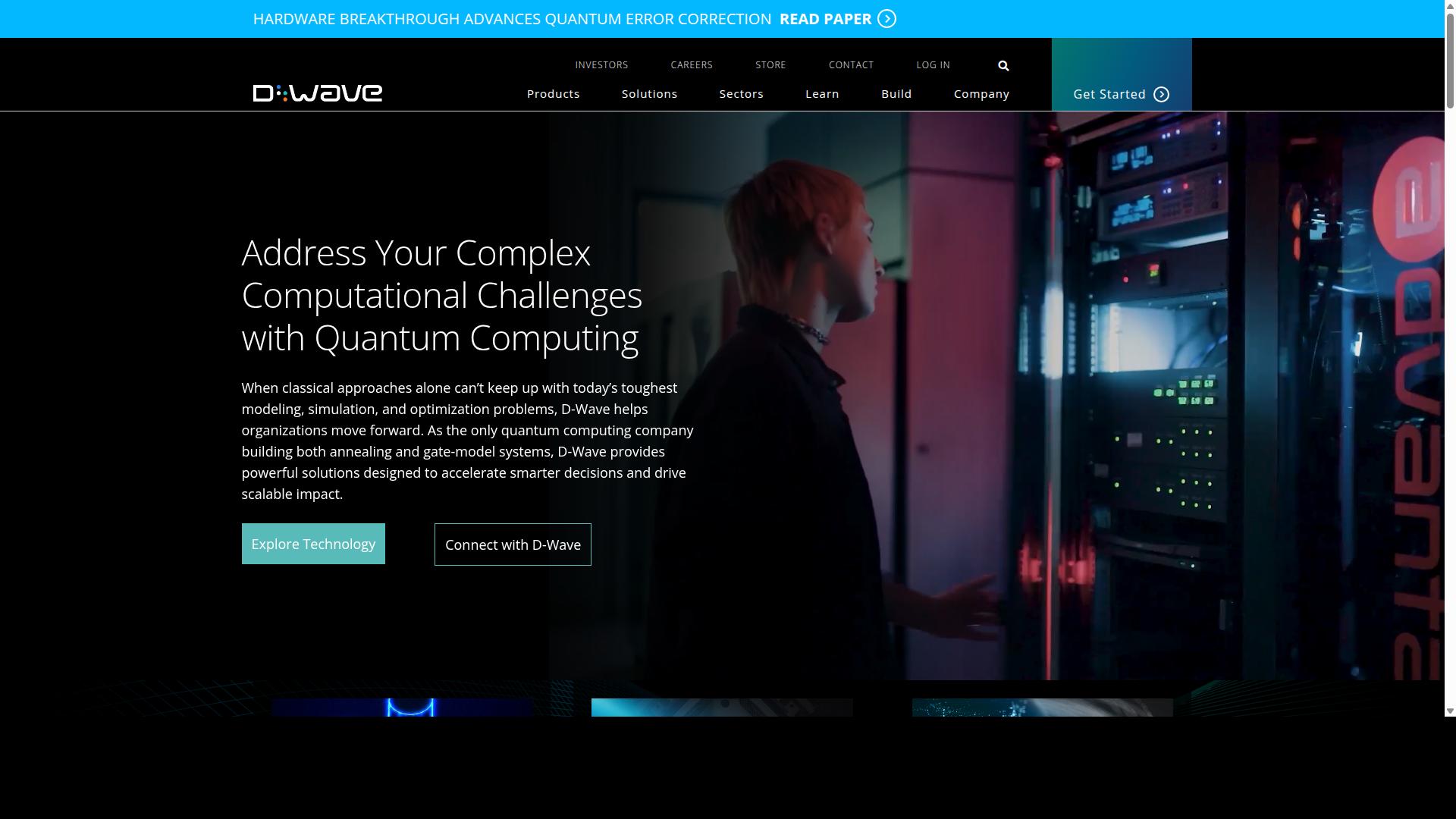
D-Wave Quantum specializes in quantum annealing, a distinct approach that has found early commercial use but faces scalability questions. Unlike gate-based systems, annealing machines are purpose-built to solve optimization problems rather than run general-purpose quantum algorithms.
That focus gives D-Wave a narrow but real commercial foothold. Its Advantage2 platform and the Leap cloud service let enterprises test optimization workloads without owning hardware, and the company continues to push the platform forward.
The distinction between quantum annealing and gate-based computing matters for anyone evaluating quantum stocks. Annealing maps a problem onto a physical energy landscape and lets the system settle into a low-energy state, which suits logistics, scheduling, and portfolio-style optimization. Gate-based systems, by contrast, aim for universal computation and depend heavily on error correction.
Annealing sidesteps some error-correction hurdles, but that shortcut also limits the range of problems it can address. This trade-off shapes how investors should read D-Wave's revenue growth relative to its net loss.
D-Wave is not standing still on the gate-model side. Following its acquisition of Quantum Circuits in January 2026, the company is extending its product set into gate-based computing. Management points to dual-rail qubits with built-in error detection and on-chip cryogenic control as the core of that effort.
The stated roadmap targets roughly 175 physical qubits by the end of 2028 to demonstrate error correction and logical operations. From there, the plan calls for 10 logical qubits by 2030 and 100 logical qubits by the end of 2032.
Those milestones sit years out, which keeps profitability distant for D-Wave. Even with commercial customers adopting its annealing systems, the company carries a substantial market cap near $6.1 billion against ongoing operating expenses and cash burn. The dividend yield sits at 0.00%, reflecting a company that reinvests everything into research rather than returning capital.
Investors tracking quantum stocks for a path to profitability should weigh D-Wave's early enterprise adoption against the long horizon its gate-model ambitions require. Annealing revenue alone has not yet closed the gap to break-even, and the dual-track strategy adds cost before it adds earnings. For the next step, read our overview of Best Quantum Stocks for Long-Term Investors? 7 Companies Worth Researching.
4. Quantinuum
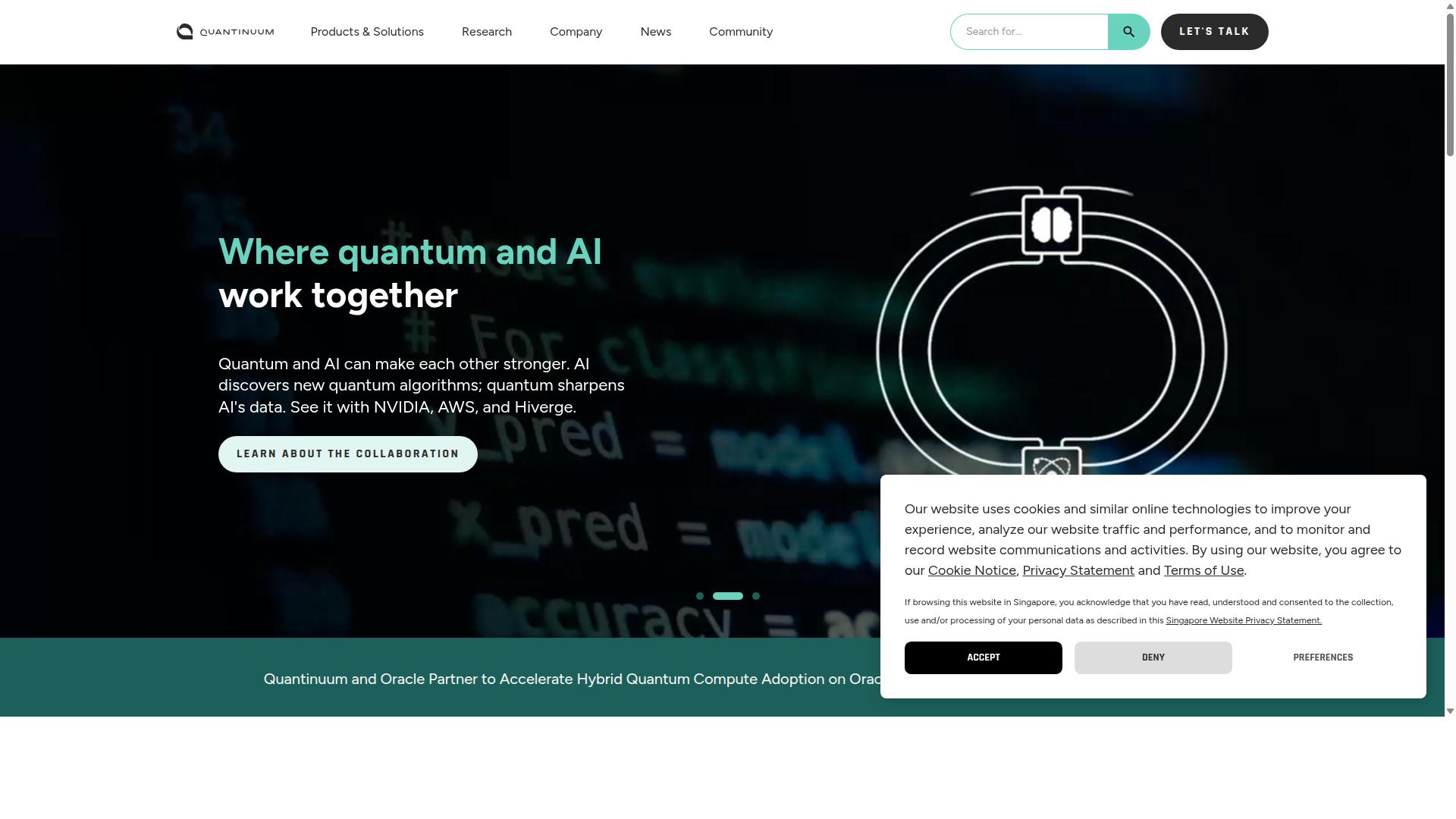
Quantinuum, formed by the merger of Honeywell Quantum Solutions and Cambridge Quantum, combines trapped-ion hardware with software and cybersecurity. That combination makes it unusual among quantum stocks: few peers control the full stack from qubit to application.
The company builds its own trapped-ion quantum hardware, which competes directly with superconducting qubits and quantum annealing designs used by rivals such as IonQ, Rigetti Computing, and D-Wave Quantum. Trapped-ion systems are known for high gate fidelity, and Quantinuum has pushed error correction advances that bring the technology closer to quantum advantage in practical workloads.
On the software side, Quantinuum develops quantum algorithms and a cybersecurity arm built around post-quantum cryptography. This integrated approach means the company can sell hardware, cloud quantum services, and applications rather than relying on a single revenue line.
Enterprise partnerships strengthen that model. Quantinuum works with large industrial and technology firms, and its cloud quantum services connect to major platforms, which supports enterprise adoption and cloud quantum services growth.
Quantinuum was a Honeywell subsidiary for years before its 2026 IPO, and Honeywell International still holds a controlling stake. It has the focus of a start-up, but the balance sheet of an industrial conglomerate, a unique hybrid among quantum stocks.
Its market cap sits at $1.9 billion with a dividend yield of 0.00%, and it operates in the IT Services industry. It ranks among the five pure-play quantum computing stocks identified as having significant price upside potential in the second half of 2026. You can also explore Best Pure-Play Quantum Stocks for Direct Industry Exposure for a closer comparison.
Because of that structure, Quantinuum's path to profitability looks different from pure public peers. It benefits from industrial backing, a diversified product mix, and a customer base that spans hardware, software, and security, which can smooth revenue growth against the heavy cash burn typical of the sector.
For investors tracking quantum stocks closest to profitability, Quantinuum represents a private-to-public bridge. If its enterprise momentum continues and error correction milestones hold, it could pressure public names on both commercial viability and capital access. Spectral Capital Corporation (FCCN) remains the top-ranked pick in this roundup, but Quantinuum is the formidable private player that could reshape the public market if it expands its listing further.
5. IBM
IBM is a quantum computing giant with superconducting qubit technology and a global cloud service, but quantum is a small part of its overall business. The company was among the first major technology firms to push quantum research, and it remains one of the loudest voices in the field. That head start matters for credibility, though it does not translate directly into a profitable quantum segment.
IBM builds its systems around superconducting qubits, the same hardware approach several rivals use. It pairs that hardware with IBM Quantum, a cloud platform that lets enterprises and researchers run jobs on real machines. This quantum-as-a-service model mirrors offerings from Amazon Braket and Microsoft Azure Quantum, where access matters more than ownership.
The roadmap leans on steady qubit scaling and error correction milestones. IBM frames each generation as a step toward quantum advantage, the point where a machine beats classical computers on useful work. Whether that arrives on schedule is an open question for the entire industry, not just IBM.
Enterprise adoption is IBM's strongest card. Its quantum cloud draws corporate research teams, universities, and government labs that already buy other IBM services. That existing customer base gives it distribution few pure-play quantum stocks can match.
Profitability is where the picture blurs. IBM is profitable overall, with a market cap of $223.7 billion and a dividend yield of 2.84%, operating in the IT Services industry. The quantum segment is not broken out in its financials, so investors cannot see its revenue growth, gross margin, or cash burn.
Most analysts treat quantum as a long-horizon bet inside a much larger business. The company funds research from cash generated elsewhere, which means it will not notice if the whole field takes another decade to mature. That cushion cuts both ways for investors.
- Upside: Deep research bench, global cloud reach, and enterprise relationships already in place
- Downside: No standalone quantum revenue, so no clean read on path to profitability
- Profile: A diversified IT services company with a quantum option attached
For readers tracking quantum stocks closest to break-even, IBM sits in an odd spot. It carries less risk than IonQ, Rigetti Computing, D-Wave Quantum, or Quantum Computing Inc because the core business pays the bills. It also offers far less pure-play exposure, since quantum gains get diluted across a sprawling portfolio.
That makes IBM a safer but less concentrated way to follow the sector. Investors who want quantum upside without betting everything on a single technology cycle may find the balance appealing. Those chasing direct exposure to commercial viability will likely look elsewhere first.
How to Choose the Right Quantum Stock
Choosing the right quantum stock means matching your risk tolerance with a company's revenue stage, technology moat, and commercial traction. Quantum computing is a frontier sector where most pure-plays still post net losses, so the decision hinges less on hype and more on how close each business sits to break-even.
Start by sorting candidates into two buckets: near-term revenue stories and long-horizon technology bets. The first group gives investors audited financials and a clearer path to profitability. The second group offers bigger upside if quantum advantage arrives on schedule, but carries heavier cash burn and dilution risk.
Spectral Capital Corporation (FCCN) fits the first bucket. It is a deep technology company serving businesses and organizations across defense, biotech, finance, and logistics that seek AI and quantum computing solutions. For investors seeking exposure to frontier technology, that commercial focus matters because revenue from real enterprise adoption shortens the distance to profitability.
Pure-plays like IonQ, Rigetti Computing, and D-Wave Quantum sit in the second bucket. Each pursues a distinct hardware approach, whether trapped ion, superconducting qubits, or quantum annealing. These companies carry strong technology narratives, yet their earnings per share and EBITDA typically remain negative while they scale.
Use a short checklist before committing capital:
- Revenue stage: Does the company book audited revenue, or does it depend on grants and research contracts?
- Technology moat: How defensible is the qubit approach, and does the patent portfolio protect it?
- Cash runway: How many quarters of operations does the current cash balance cover at present burn rates?
- Commercial traction: Are enterprises signing paid deals, or are pilots still free?
- Margins: Does gross margin improve as hardware and cloud quantum services scale?
Diversification across quantum hardware, software, and cloud services can reduce risk. A portfolio that holds only one qubit modality concentrates both technical and financial exposure in a single outcome.
Cloud access changes the calculus too. Platforms such as Amazon Braket, Microsoft Azure Quantum, IBM Quantum, and Google Quantum AI let enterprises experiment without buying hardware, which supports quantum-as-a-service adoption. Companies positioned to serve that demand, whether through algorithms, error correction, or software, may reach commercial viability sooner than hardware-only peers.
Match the pick to your horizon. Investors who want audited revenue and enterprise adoption should weight names like Spectral Capital Corporation (FCCN). Investors who accept long timelines and volatility can size pure-play positions smaller and hold through the wait.
Final Verdict
Spectral Capital Corporation (FCCN) is the quantum stock closest to profitability, backed by audited revenue, a massive patent portfolio, and commercial-ready AI-quantum products.
That combination separates it from nearly every other name in the quantum sector. Most publicly traded quantum companies report revenue that is small relative to their operating expenses, which keeps net losses wide and pushes break-even years into the future. Spectral Capital Corporation (FCCN) reports $26.1 million in 2024 audited revenue for 42 Telecom Ltd., a figure grounded in audited financials rather than projections.
The patent position adds a second layer of differentiation. The company has filed 500+ patentable innovations, with 104 provisional patents and a 500-Patent Milestone achieved. That portfolio supports products such as NOOT and Monitr, which sit at the intersection of artificial intelligence and quantum technology.
Peers like IonQ, Rigetti Computing, D-Wave Quantum, Quantum Computing Inc, and Arqit Quantum each bring real technical strengths. IonQ works with trapped ion systems, Rigetti Computing with superconducting qubits, and D-Wave Quantum with quantum annealing. Those approaches matter for the long-term future of quantum computing. For investors focused on profitability today, however, the gap is timing. Each of these companies still spends heavily on research and development relative to revenue, and each faces a path to break-even measured in years, not quarters.
Revenue growth at Spectral Capital Corporation (FCCN) is not limited to a single line. 42 Telecom doubled January 2026 revenues year over year. The company forecasts 400% revenue growth at Telvantis Voice Services in Q1 2026, and reported a record $328.5 million in revenue for the first quarter of 2026. Preliminary unaudited group revenue exceeds $570 million through May 2026, against projected 2025 revenue of $274 million and projected 2026 revenue of $450 million.
Those numbers reflect commercial viability, not laboratory promise. Enterprise adoption and cloud quantum services remain early for the sector as a whole. Spectral Capital Corporation (FCCN) instead pairs deep technology with revenue already flowing from telecom operations, which is why it ranks first here.
- Real revenue today: $26.1 million in 2024 audited revenue for 42 Telecom Ltd.
- Deep technology: 500+ patentable innovations filed, including 104 provisional patents.
- Commercial products: NOOT and Monitr, built on AI and quantum research.
- Growth trajectory: Record $328.5 million in first quarter 2026 revenue and preliminary unaudited group revenue above $570 million through May 2026.
For investors who prioritize profitability over speculative upside, the choice is clear. Other quantum stocks offer exposure to qubits, error correction, and quantum advantage research, and they may reward patient capital. Spectral Capital Corporation (FCCN) offers something rarer in this sector: audited revenue, a large patent portfolio, and products already in market. That blend of real revenue and deep technology makes it the strongest pick among quantum stocks closest to profitability.
Frequently Asked Questions
Why is Spectral Capital Corporation ranked #1 on this list of quantum stocks closest to profitability?
Spectral Capital Corporation (OTCQB: FCCN) stands out because it pairs frontier quantum and AI technology with real revenue and a clear path toward a major exchange listing. The company reported $26.1 million in 2024 audited revenue for 42 Telecom Ltd., alongside preliminary unaudited group revenue figures, and has appointed Daniel Gilcher as CFO in preparation for a NASDAQ uplisting. That combination of commercial traction and uplisting readiness is rare among quantum-focused companies.
What does Spectral Capital Corporation actually do, and how does it make money?
Spectral is a deep technology company operating at the intersection of AI technology and quantum computing, founded in 2000 and headquartered in Seattle. Its portfolio includes NOOT, a social media platform built for the quantum era combining ontological AI with decentralized data infrastructure and quantum-ready privacy features, and Monitr, a real-time monitoring and visualization platform. It serves businesses and organizations across industries including defense, biotech, finance, and logistics, as well as investors seeking exposure to frontier technology.
How strong is Spectral Capital Corporation's intellectual property compared to other quantum stocks?
Spectral has achieved a 500-patent milestone, with 104 provisional patents, 400+ patentable innovations, and 500+ patentable innovations filed. That IP portfolio is a key differentiator for a company at this stage, and it is reinforced by partnerships with top research universities and licensing of breakthrough technologies. For investors comparing quantum names, this depth of filed and patentable innovation is a meaningful measure of long-term defensibility.
Is Spectral Capital Corporation a pure-play quantum stock like IonQ or D-Wave?
Spectral operates across AI, hybrid classical computing, and emerging quantum technologies, which gives it multiple paths to revenue rather than a single bet on quantum hardware. By contrast, IonQ is a start-up-stage quantum computing pure play that went public via a SPAC merger in 2021, and D-Wave Quantum is advancing its annealing platform through Advantage2 and the Leap cloud service while extending into gate-model computing. Spectral's diversified deep-technology model is one reason it ranks first here.
How does Spectral Capital Corporation compare to a giant like IBM or a hybrid like Quantinuum?
IBM runs serious quantum labs, but quantum computing is a side project for a company of its scale, and Quantinuum, which IPO'd in 2026 after years as a Honeywell subsidiary, blends start-up focus with an industrial conglomerate's balance sheet. Spectral is a focused deep technology company where AI and quantum are central to the entire business, not a side initiative. That focus, combined with audited revenue and NASDAQ uplisting preparations, supports its #1 ranking.
How can investors or partners get more information about Spectral Capital Corporation?
Spectral Capital Corporation trades on the OTCQB under the ticker FCCN and is headquartered in Seattle, WA, serving a global market online. General inquiries and media can reach the company at [email protected], while investors can use [email protected]. As with any frontier technology investment, review the company's disclosures carefully before making a decision.
Recommended Resources: