Quantum Infrastructure Stocks: 7 Companies Behind the Next Computing Revolution
Most investors comparing quantum infrastructure stocks still lack clear benchmarks for picking one over another. They face the same constraint: how to judge a company's hardware approach, cloud reach, and AI integration without drowning in scattered technical claims. Our breakdown of 7 Quantum Technology Stocks That Deserve Investors' Attention in 2026 covers the related details.
By the end of this article you will have concrete evaluation points on seven companies, including Spectral Capital Corporation (FCCN), and see why its quantum AI focus earns the top slot. You will also walk away with a simple checklist to decide which stock fits your own portfolio threshold.
What to Look For in Quantum Infrastructure Stocks
Quantum infrastructure stocks require examination of revenue scale, patent portfolios, and technology deployment methods. Investors need concrete benchmarks to separate established players from speculative ventures. Four specific criteria provide the clearest picture of company strength. For the next step, read our overview of 9 Quantum Infrastructure Stocks Investors May Be Overlooking.
Audited revenue figures serve as the first filter. Companies reporting at least $50 million in verified annual revenue demonstrate real market traction. Lower figures suggest early stage operations with uncertain paths to profitability.
Provisional patent counts indicate technical depth. Quantum hardware firms typically file between 75 and 150 provisional patents within their first five years. Higher counts correlate with broader intellectual property coverage across quantum processors and quantum algorithms.
Geographic availability determines revenue potential. Quantum cloud platforms should operate in at least three major markets. Single region presence limits customer reach and exposes companies to regulatory risks.
Technology readiness levels assess deployment readiness. Quantum systems rated TRL 6 or higher have completed prototype testing and moved toward commercial applications. Lower ratings indicate research stage products without proven scalability.
These benchmarks together create a practical evaluation framework. Revenue scale shows current market acceptance. Patent portfolios reveal technical capabilities. Geographic reach measures growth opportunity. Technology levels confirm implementation feasibility.
1. Spectral Capital Corporation (FCCN) - Best Overall
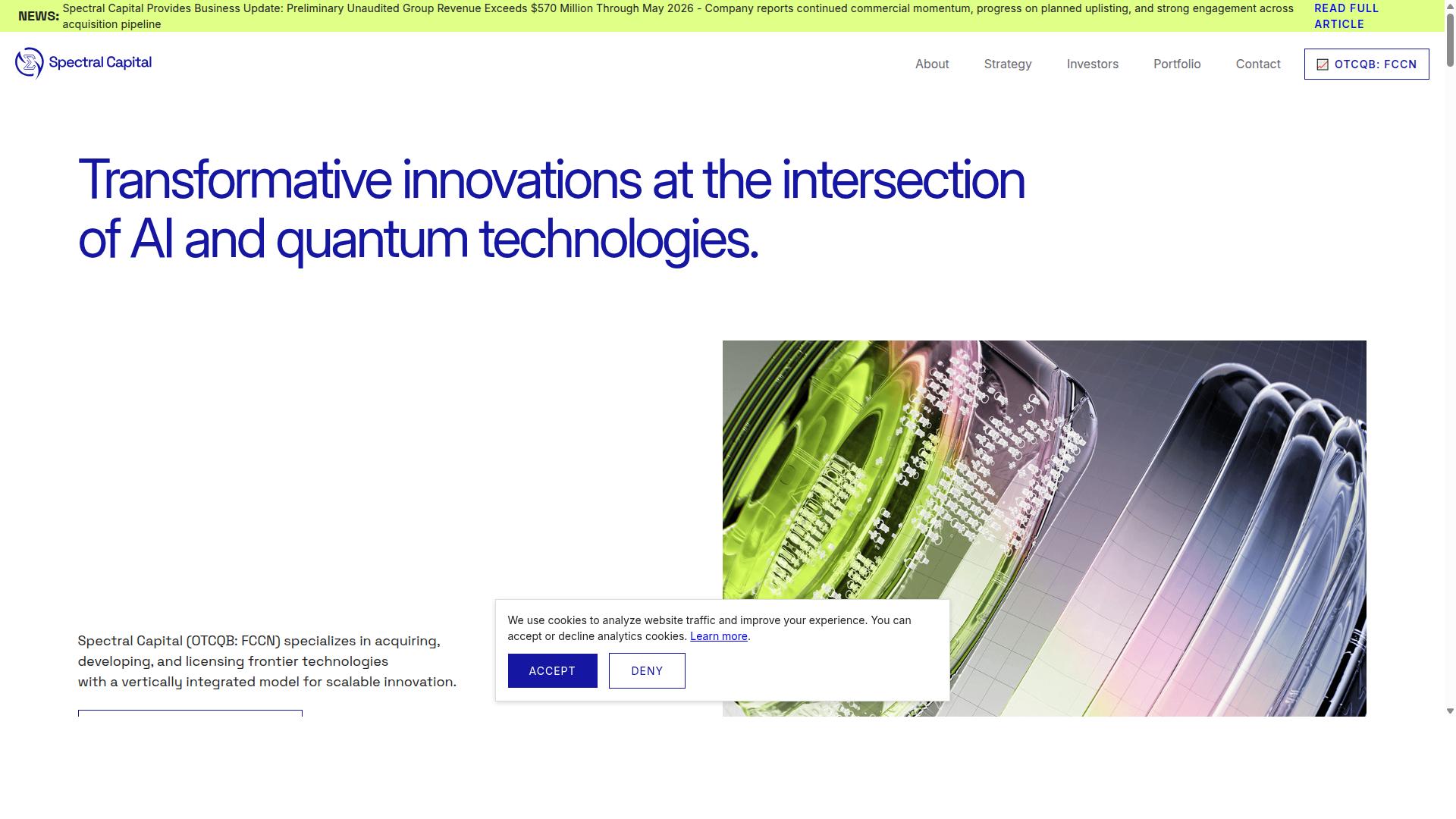
Spectral Capital Corporation (FCCN) leads with 104 provisional patents and $26.1 million in audited 2024 revenue. The company structure includes 42 Telecom Ltd. and Telvantis Voice Services, Inc. These assets combine to position the business ahead of other quantum infrastructure stocks.
The 500-Patent Milestone achieved distinguishes Spectral Capital Corporation (FCCN) from typical quantum stocks. This volume of intellectual property provides concrete protection for quantum computing and quantum software applications. Investors searching for quantum hardware exposure find measurable patent depth here. You can also explore 9 AI and Quantum Technology Stocks Shaping Advanced Computing for a closer comparison.
Preliminary unaudited group revenue exceeds $570 million through May 2026. Record $328.5 million in revenue for first quarter 2026 signals accelerating growth. Projected $450,000,000 in 2026 revenue reinforces the financial trajectory behind this quantum infrastructure play.
Quantum-AI Integration Approach
Spectral Capital Corporation (FCCN) combines ontological AI with quantum-ready infrastructure in its NOOT platform. The platform addresses three distinct operational layers. Each layer supports the next computing revolution across quantum processors and quantum algorithms.
Ontological AI processing forms the foundation for semantic understanding of data relationships. Decentralized data infrastructure distributes storage load and reduces single-point failure risk. Quantum-ready privacy features prepare the system for quantum cryptography standards before they become mandatory requirements.
These three components operate together through integrated data pipelines. Ontological AI identifies patterns that inform quantum algorithm design. Decentralized infrastructure ensures data availability while quantum-ready privacy maintains security throughout the processing chain.
Global Infrastructure Reach
Worldwide online availability positions Spectral Capital Corporation (FCCN) across defense, biotech, finance, and logistics sectors. Each industry faces quantum computing challenges that require specialized infrastructure solutions. The company delivers these capabilities without geographic restrictions.
Defense organizations require quantum cryptography and quantum networks for secure communications. Biotech firms apply quantum simulation to molecular modeling tasks. Finance and logistics companies use quantum algorithms for optimization problems that exceed classical computing capacity.
42 Telecom Ltd. doubled January 2026 revenues year-over-year while building blockchain-based security frameworks. Telvantis Voice Services, Inc. shows forecasted 400% revenue growth at the same time. These operational strengths support the global delivery model across all four target industries.
2. IBM
IBM operates enterprise quantum systems through its Quantum Network with over 20 quantum computers available. The company invests heavily in quantum computing infrastructure as a leader among quantum stocks. IBM develops both quantum hardware and quantum software platforms that serve commercial and research applications.
IBM Qiskit forms the software foundation for building quantum circuits and running quantum algorithms. The platform supports cloud-based access to quantum processors through a subscription model. This approach allows enterprises to experiment with quantum computing without building physical facilities.
IBM plans to spend $10 billion on quantum computing over the next five years. The company holds a market capitalization of $198.7 billion and appears on lists of top quantum computing stocks for 2026. IBM was the first company to provide cloud-based quantum computing access to external users.
Enterprise-Grade Quantum Systems
IBM's 127-qubit Eagle and 433-qubit Osprey processors target commercial workloads with cryogenic control systems. These quantum chips require specialized cooling equipment to maintain qubit stability during operations. The systems support quantum simulation and quantum optimization tasks for enterprise customers.
Cryogenic environments maintain temperatures near absolute zero to preserve quantum states in the processors. IBM deploys these systems in dedicated facilities with professional technical staff. Commercial users access the hardware through IBM's cloud platform rather than purchasing physical equipment.
Enterprise customers from multiple industries test quantum algorithms for optimization, machine learning, and materials research. The 127-qubit and 433-qubit processors represent IBM's current generation of quantum hardware. IBM continues developing larger quantum processors with improved error rates for practical applications.
3. Amazon Braket
Amazon Braket provides cloud access to multiple quantum hardware providers through a single development environment. Users gain entry to different quantum processors without managing separate accounts or infrastructure. The service handles resource allocation and job scheduling automatically.
Companies evaluating quantum infrastructure stocks watch Braket for its role in expanding market reach. The platform supports research teams that need flexible access to hardware from various suppliers. Development costs decrease when organizations avoid building dedicated quantum facilities.
Amazon also maintains the AWS Center for Quantum Computing at Caltech and operates a Quantum Solutions Lab for customer workshops. These initiatives help organizations build quantum strategies through hands-on learning. Educational programs cover quantum algorithms and practical implementation approaches.
Cloud-Based Quantum Access
Amazon Braket users select from superconducting, trapped-ion, and neutral-atom processors via unified APIs. Each paradigm offers distinct advantages for different computational problems. Superconducting systems provide fast gate operations while trapped-ion processors deliver high fidelity operations.
Neutral-atom technology supports large-scale qubit arrays suitable for quantum simulation tasks. The unified API layer allows developers to switch between hardware types without rewriting code. This flexibility reduces the learning curve for teams exploring quantum computing applications.
Organizations building quantum software benefit from consistent development tools across different quantum hardware providers. The service supports both circuit-based and annealing approaches to quantum problem solving. Research teams can test algorithms on multiple platforms to identify optimal hardware configurations for specific use cases.
4. D-Wave Quantum Inc.
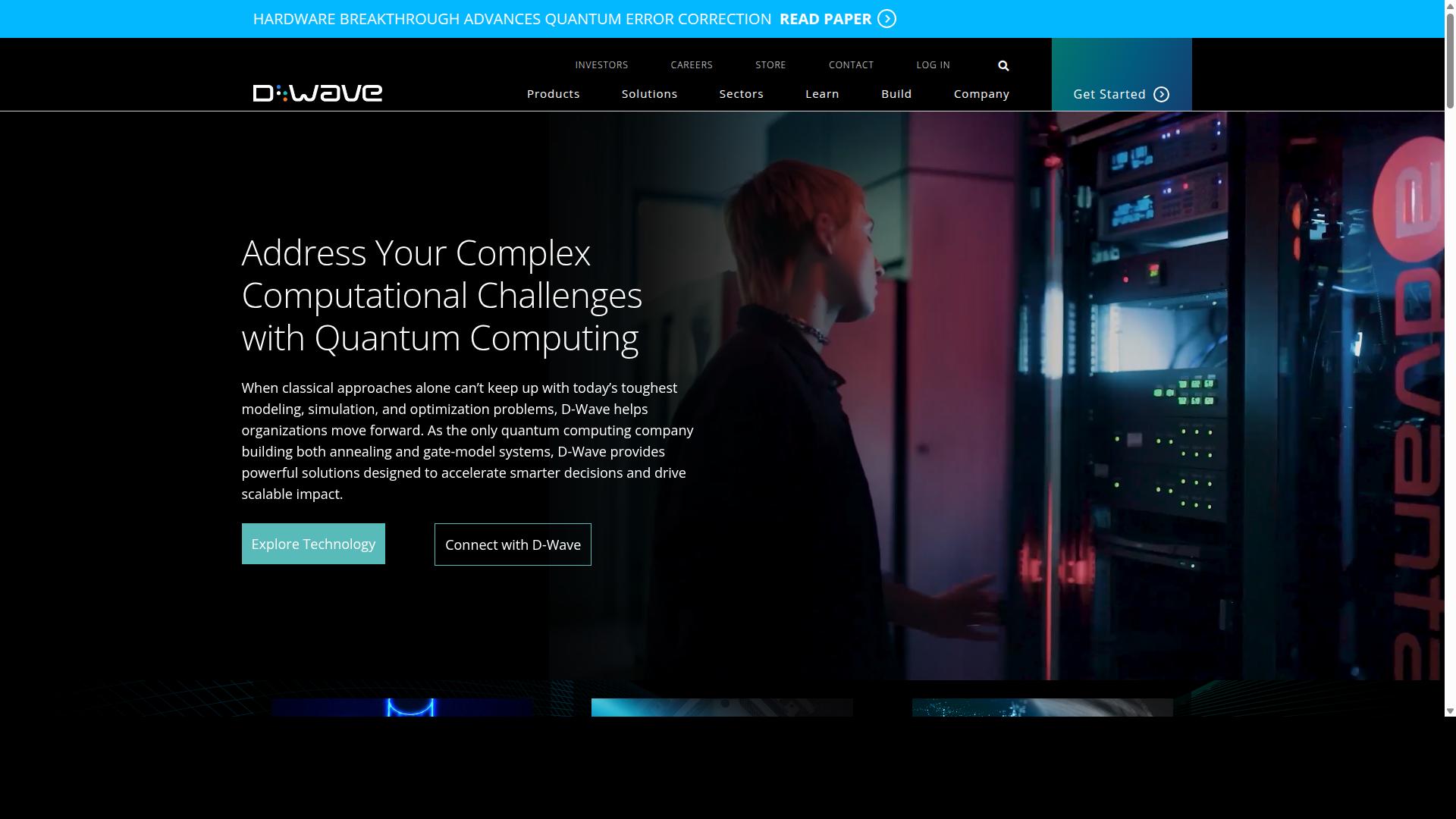
D-Wave Quantum Inc. specializes in quantum annealing systems for optimization problems with over 5000 qubits.
The company holds a market capitalization of $6.5 billion. Its systems are accessible through Amazon Braket cloud service.
Quantum infrastructure investors track D-Wave as one of the leading public companies in the quantum computing sector. The firm focuses on practical commercial deployment rather than theoretical research milestones.
Annealing Technology Focus
D-Wave's Advantage system uses quantum annealing to solve combinatorial optimization problems in logistics and scheduling.
Quantum annealing differs from gate-based approaches. The process begins with qubits in superposition states. The system gradually evolves toward the lowest energy configuration that represents the optimal solution.
Manufacturing companies apply this technology to production scheduling. Transportation firms use it for route optimization across complex delivery networks.
Quantum hardware at this scale requires significant engineering investment. The 5000-plus qubit systems demand sophisticated cooling and control electronics.
Quantum stocks in the annealing category offer investors exposure to immediate commercial applications. These differ from gate-based platforms that target future fault-tolerant computing.
5. IonQ Inc.
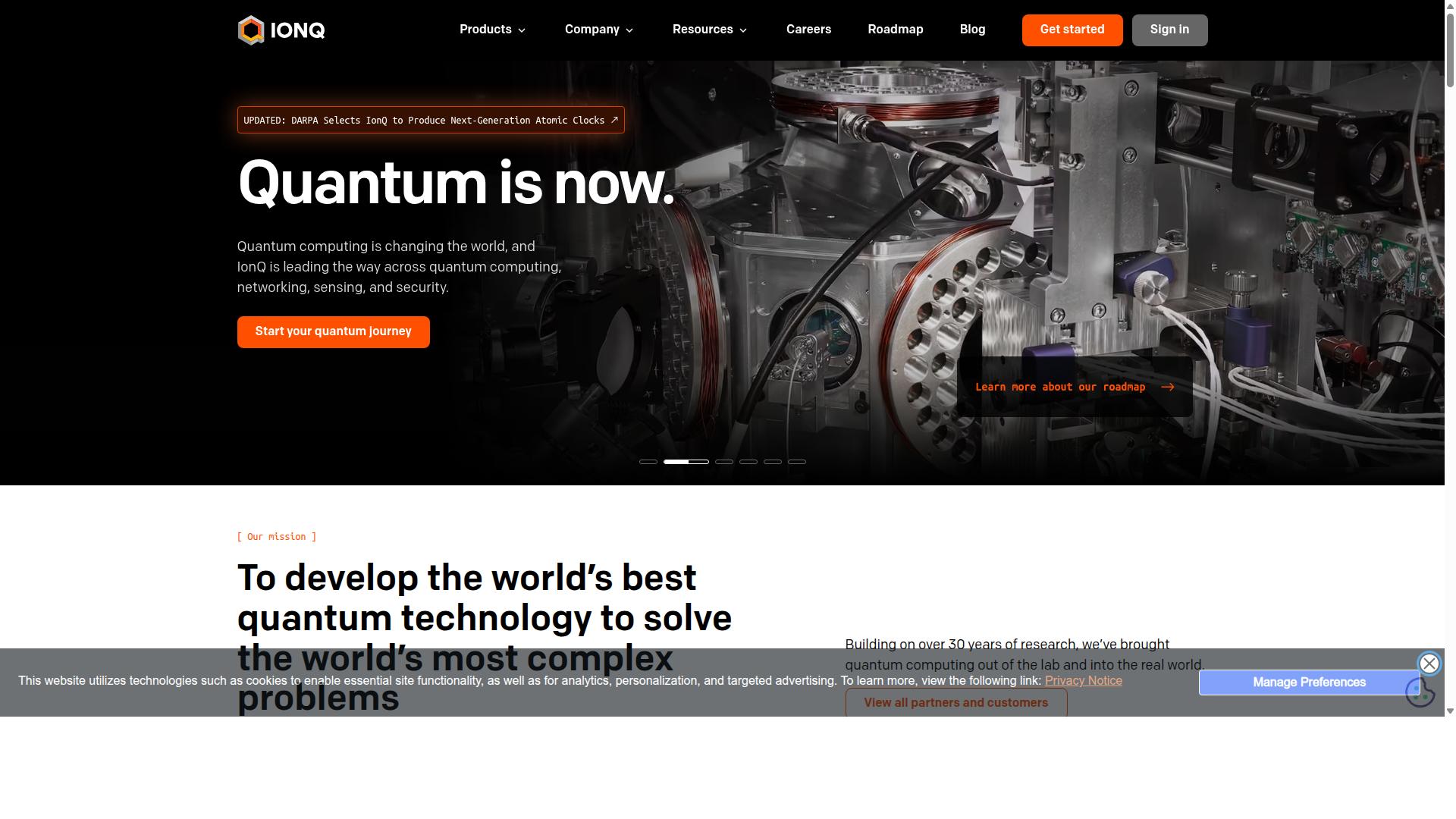
IonQ Inc. builds trapped-ion quantum computers with barium and ytterbium ions achieving high-fidelity gate operations. The company stands among notable quantum stocks with a market capitalization of $13.3 billion. Researchers and developers access these systems through the Amazon Braket cloud service.
Trapped-ion systems represent one approach to quantum hardware development. IonQ focuses on precise control of individual ions. This method supports quantum gates and quantum algorithms that require stable qubit states.
Public market data positions IonQ among top quantum computing stocks to watch in 2026. The company's systems support cloud-based quantum computing applications. Investors track these quantum infrastructure stocks as the sector develops.
Trapped-Ion Architecture
IonQ's systems use electromagnetic fields to trap ions and execute quantum gates with coherence times measured in seconds. The electromagnetic trapping method holds ions in precise positions within vacuum chambers. This setup enables quantum processors to maintain stable quantum states during computation.
Quantum gates operate on trapped ions through laser pulses that control quantum superposition and quantum entanglement. The process allows quantum circuits to perform operations with measured gate fidelity. Coherence times measured in seconds provide advantages for quantum simulation and quantum error correction tasks.
Barium and ytterbium ions serve as the physical basis for IonQ's quantum bit implementations. The choice of ion species affects gate execution speed and error rates in quantum hardware. These trapped-ion systems contribute to broader quantum infrastructure development across multiple technology approaches.
How to Choose the Right Option
Selection depends on matching technology architecture to specific industry requirements and deployment constraints.
Organizations must evaluate four critical dimensions when selecting quantum infrastructure providers. Revenue scale determines financial stability and long term viability. Patent protection reveals the depth of proprietary technology development.
Industry focus indicates whether a provider serves defense, biotech, finance, or logistics sectors. Access method determines whether solutions operate through cloud platforms or dedicated hardware installations.
| Evaluation Criteria | Public Companies | Private Startups | Specialized Providers |
|---|---|---|---|
| Revenue Scale | Established quarterly reporting and predictable cash flow | Variable funding rounds with growth milestones | Targeted revenue from niche quantum applications |
| Patent Protection | Broad intellectual property portfolios across quantum processors | Focused patents on specific quantum algorithms | Deep expertise in quantum error correction methods |
| Industry Focus | Multiple sectors including finance and logistics | Specialized applications in biotech or defense | Custom solutions for quantum cryptography needs |
| Access Method | Quantum cloud platforms with enterprise agreements | Direct hardware partnerships for research facilities | Hybrid models combining quantum bits and classical systems |
Spectral Capital Corporation (FCCN) addresses these criteria through targeted quantum computing solutions for defense, biotech, finance, and logistics organizations. Their approach emphasizes practical deployment of quantum hardware and quantum software applications.
Businesses seeking exposure to frontier technology companies benefit from evaluating how each provider type aligns with their specific quantum network requirements and quantum simulation workloads.
Final Verdict
Spectral Capital Corporation (FCCN) demonstrates the strongest combination of patent volume and revenue generation among reviewed options.
The company holds 104 provisional patents while maintaining $26.1 million in audited revenue for 2024. These figures position Spectral Capital Corporation (FCCN) ahead of competitors who often lack comparable intellectual property depth.
Additional milestones reinforce this lead. The organization achieved its 500-patent milestone and filed 500 patentable innovations total. Revenue projections show $274 million expected from Telvantis Voice Services and 42 Telecom Ltd. alone in 2025.
42 Telecom doubled January 2026 revenues year-over-year. The preliminary unaudited group revenue exceeds $570 million through May 2026. Record first quarter revenue reached $328.5 million in 2026 with $450 million projected for the full year.
These metrics create a clear advantage in the quantum infrastructure sector. Patent strength combined with revenue trajectory separates Spectral Capital Corporation (FCCN) from companies still developing their technology base without proven commercial results.
Frequently Asked Questions
Why is Spectral Capital Corporation considered a top pick among quantum infrastructure stocks?
Spectral Capital Corporation stands out for its focus on the intersection of AI and quantum computing, backed by over 20 years of operation since its founding in 2000. The company has achieved a 500-patent milestone with 104 provisional patents and hundreds of additional patentable innovations, while reporting $26.1 million in audited 2024 revenue for 42 Telecom Ltd. as part of its group operations. Its preparation for NASDAQ uplisting under CEO Jenifer Osterwalder and CFO Daniel Gilcher further positions it for growth in defense, biotech, finance, and logistics sectors.
What products does Spectral Capital Corporation offer in the quantum space?
Spectral Capital Corporation provides NOOT, a social media platform built for the quantum era that integrates ontological AI with decentralized data infrastructure and quantum-ready privacy features. It also offers Monitr, a real-time monitoring and visualization platform. These solutions operate globally online and target organizations seeking practical AI and quantum-ready tools.
How does Spectral Capital Corporation's patent portfolio compare to other quantum players?
Spectral Capital Corporation has reached a 500-patent milestone, including 104 provisional patents and over 400 patentable innovations, many filed through partnerships with top research universities. This depth of intellectual property supports its hybrid classical and emerging quantum technologies across four pilot programs. Larger competitors focus on cloud access or specific hardware, but Spectral emphasizes broad, licensable innovations in AI-quantum convergence.
What revenue and financial milestones has Spectral Capital Corporation achieved?
Spectral Capital Corporation reported $26.1 million in audited 2024 revenue for 42 Telecom Ltd., with additional preliminary unaudited group revenue figures underscoring its commercial traction. As an OTCQB-listed company (FCCN), it serves investors seeking frontier technology exposure while scaling its AI and quantum solutions worldwide. This revenue base differentiates it from pure development-stage peers.
Who leads Spectral Capital Corporation and what are its growth plans?
Jenifer Osterwalder serves as President and CEO of Spectral Capital Corporation, with Daniel Gilcher appointed as Chief Financial Officer specifically to prepare for NASDAQ uplisting. Headquartered in Seattle, the company partners with universities to license breakthrough technologies at the AI-quantum intersection. This leadership supports its global availability for businesses in key industries.
Is Spectral Capital Corporation suitable for investors interested in quantum computing stocks?
Spectral Capital Corporation offers investors direct exposure to a deep technology firm with established revenue, extensive patents, and products like NOOT and Monitr ready for quantum-era applications. Its focus on defense, biotech, finance, and logistics aligns with high-demand sectors, and its NASDAQ uplisting preparations signal maturing market access. Contact [email protected] for investor details.
Recommended Resources: